
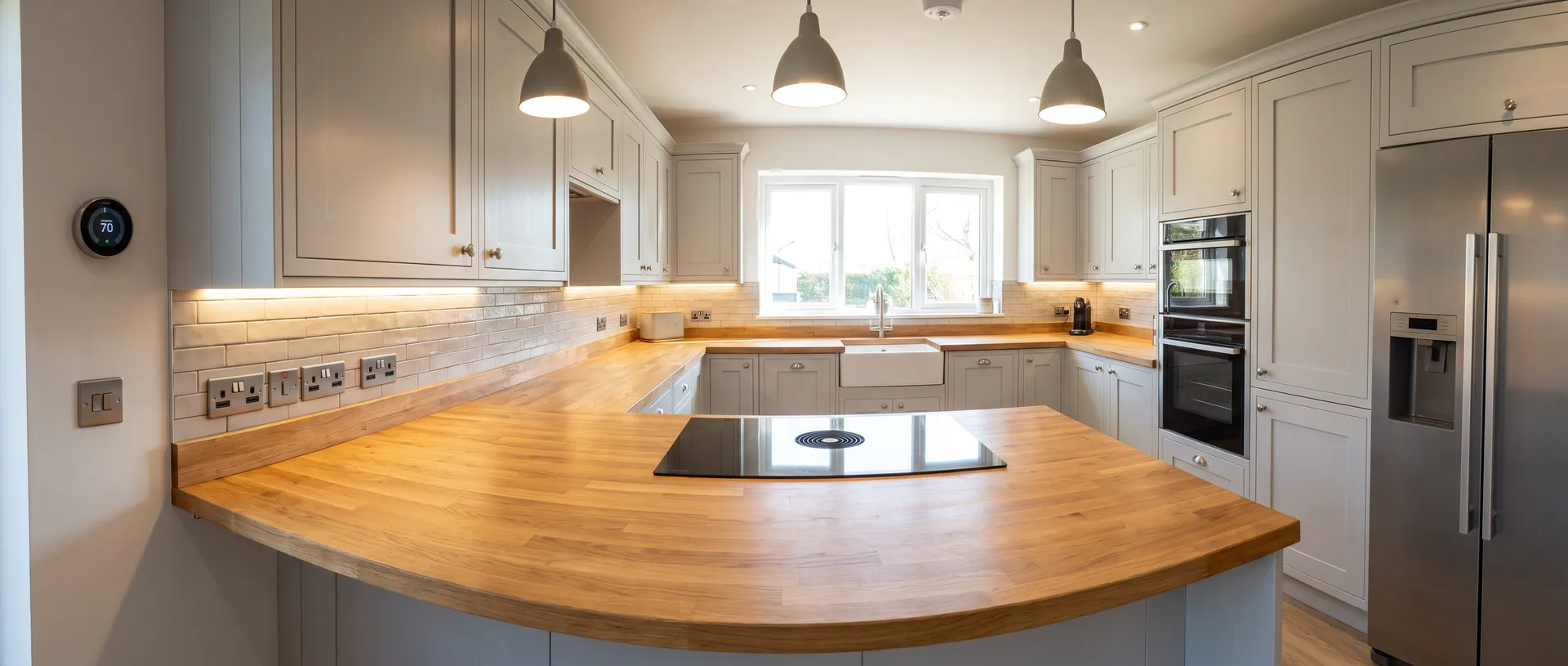
Do Kitchen Fitters Do Electrical Work?
Kitchen fitters fit appliances but do not carry out hardwired electrical connections — that requires a Part P qualified electrician. This includes oven and hob connections and new socket circuits. Fitters and electricians work at different stages of the installation programme.
What Requires an Electrician
A kitchen fitter positions and secures all electrical appliances within their housings. However, any hardwired electrical connection — including ovens, electric hobs, extractor fans on a dedicated circuit, and new socket outlets — must be carried out by a Part P qualified electrician. Plugging an appliance into an existing socket is not notifiable work, but new circuits and hardwired connections are. Attempting these connections without the correct qualification is illegal and potentially dangerous.
Part P Certification Explained
Part P of the Building Regulations covers electrical safety in dwellings in England. Notifiable electrical work must be carried out by a registered electrician who can self-certify compliance, or by any competent person with subsequent inspection by a building control officer. Kitchen installation routinely generates notifiable electrical work — new circuits for ovens, hobs, and additional sockets are all notifiable. Always use a Part P registered electrician and obtain a completion certificate for your records.
Scheduling Your Electrician Around Installation
Like plumbing, electrical work happens at two stages — first fix before installation and second fix after. Book your electrician in parallel with your fitter and confirm the programme at the survey stage. Install My Kitchen provides a clear installation programme at survey stage to help you co-ordinate all trades correctly. Call Pindi Sahota on 07399 651836.
Typical Electrical Costs in a Kitchen Renovation
Electrical work in a kitchen renovation commonly costs £300–£800 depending on scope, similar to plumbing. A straightforward second-fix connection of an oven and hob to existing circuits sits at the lower end; adding new socket circuits, moving consumer unit connections, or wiring under-cabinet lighting increases the cost. Always get electrical quotes based on the final kitchen plan, since appliance positions directly determine how many new circuits are needed.
What Happens if Electrical Work Isn't Ready on Time
If first-fix electrical work — new cables and back boxes — is not complete when the fitter is due to start, installation of any units near the affected wall must be delayed until sockets and switches are correctly positioned. This is one of the most common causes of installation programmes over-running. Confirming electrical readiness with your electrician a few days before the fitter's start date, rather than assuming it will be finished, avoids losing a paid installation day to someone else's schedule.
Related Questions
No. Electric oven connections are notifiable electrical work under Part P of the Building Regulations. A Part P qualified electrician must carry out this connection. A kitchen fitter will position the oven in its housing ready for connection.
First-fix electrical work involves running new cables and positioning back boxes for sockets, switches, and appliance connections before the kitchen is installed. It must be completed before the fitter starts so that service positions are correct.
Yes. Any notifiable electrical work including new circuits must be certified by a Part P registered electrician. This certificate is important for building control compliance and is required when you sell the property.
First-fix electrical work in a kitchen typically takes half a day to a full day. Second-fix connection of appliances takes a further 2–4 hours depending on the number of appliances. This is planned into the overall installation programme.
Related Questions
Explore More
Ready to Book Your Kitchen Installation?
Book a survey and get a fixed quote within 24 hours. Survey fee £195 — credited back on booking.