
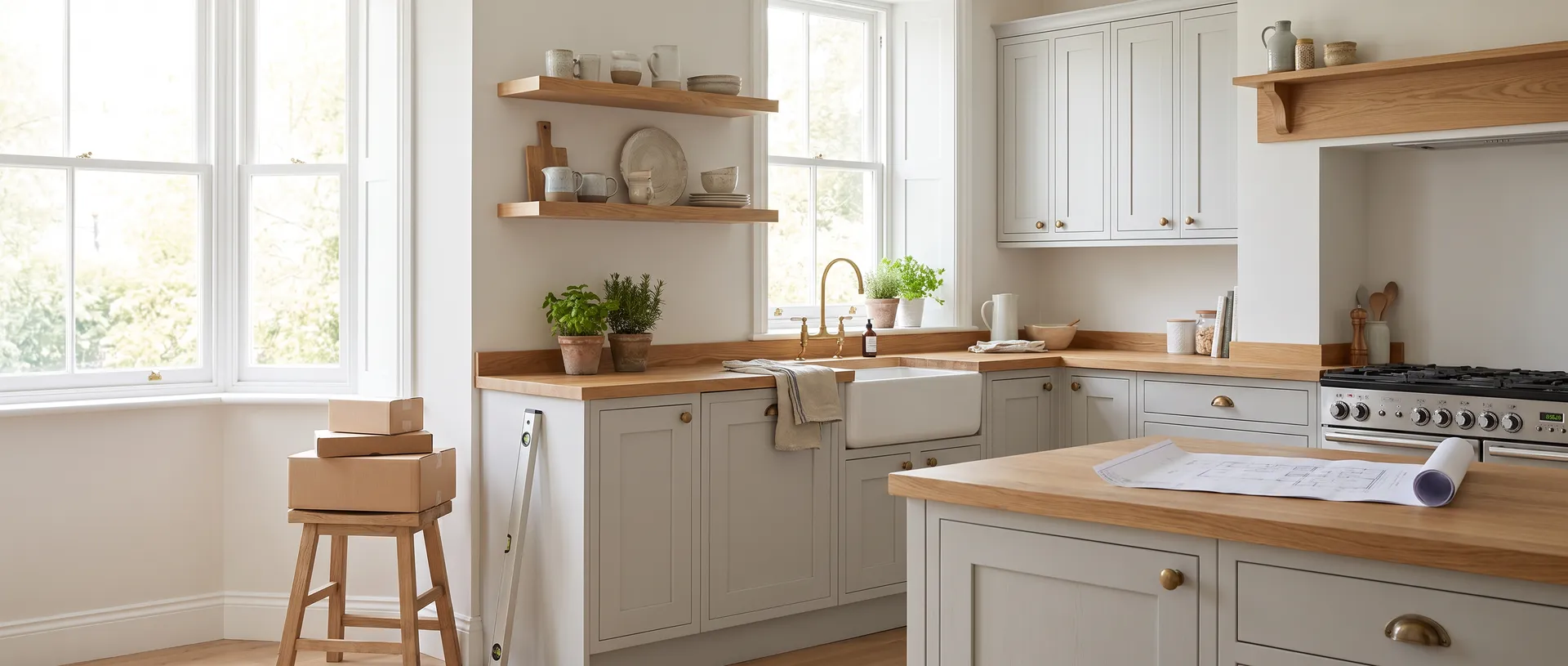
We fit all built-in kitchen appliances including ovens, hobs, dishwashers, extractor fans and sink bowls. Hardwired appliances require a qualified electrician; plumbed appliances require a plumber.
- All built-in appliances fitted and positioned to manufacturer guidelines
- Hardwired appliances require a qualified electrician — we advise on sequencing
- Plumbed appliances (dishwashers, sinks) require a qualified plumber
- Extractor fans and hood fixings checked for correct alignment to the hob below
Fitting Built-In Kitchen Appliances
Modern kitchens are packed with integrated appliances, and fitting them correctly is more involved than simply sliding them into a housing. Each appliance has its own fixing method, clearance requirements and — in many cases — electrical or plumbing connections that must be made by qualified trades. Our role is to position and secure every appliance correctly so that the qualified trades can make the final connections safely and efficiently.
We fit ovens, single and double, into their housings and secure them with the correct fixing screws. We position hobs in their worktop cutouts and secure the retaining clips. We hang extractor fans and hoods at the correct height above the hob, fix them to the wall or ceiling as required and connect the ducting or recirculation kit. We position dishwashers, washing machines and fridge-freezers into their allocated spaces and adjust the legs so that the appliance sits level and the door aligns with the cabinet doors around it.
Working With Electricians and Plumbers
Hardwired appliances — ovens, hobs, extractor fans with integrated lighting — must be connected by a qualified electrician. Plumbed appliances — dishwashers, sinks, hot water taps — must be connected by a qualified plumber. This is not a limitation but a straightforward fact of building regulations and appliance warranties.
We are entirely comfortable working alongside your trades. At the survey stage we discuss the sequencing: typically the first fix electrics and plumbing happen before cabinets go in, appliances are positioned by us during the main installation, and the second fix connections are made by your trades once everything is in its final position. We are happy to speak directly with your electrician or plumber to make sure everyone knows what is expected of them and when.
If you have not yet arranged your trades, we can advise on what you will need and when. Booking your electrician and plumber early — ideally before your installation date is confirmed — helps avoid delays.
Sink Installation
Sink bowls are fitted into the worktop cutout, sealed with the appropriate silicone and secured with their retaining clips. Waste fittings and overflow connections are assembled and handed over ready for your plumber to connect to the existing waste. We fit the tap if it is a through-worktop type; the water supply connections are for your plumber.
Extractor Fans and Hoods
Extractor fans are fixed at the correct height above the cooking surface in line with the manufacturer's specification — typically 650–750 mm for gas and 450–600 mm for electric, but always confirmed against the appliance manual. Ducting runs are planned at the survey stage. Where ducting to an external wall is not possible, a recirculation kit is fitted instead.
Integrated vs Freestanding Appliances
Integrated appliances sit behind a matching cabinet door fixed to the appliance using brackets, so the door opens and closes in line with the rest of the run. Freestanding and slot-in appliances sit within a dedicated gap and are not concealed behind cabinetry. We fit both types, and where a kitchen mixes the two — for example an integrated dishwasher alongside a freestanding range cooker — we make sure the gaps, plinths and end panels around each appliance are finished cleanly regardless of which type it is.
Before Installation Day
It helps if all appliances have been delivered and at least checked for visible damage before we arrive, and that any bespoke housing dimensions have been confirmed against the actual appliance rather than the manufacturer's brochure figures, which can vary slightly between model years. We check this at the survey stage wherever the appliances are already on site, but a final check against the delivered appliance is always worthwhile before fitting begins.