
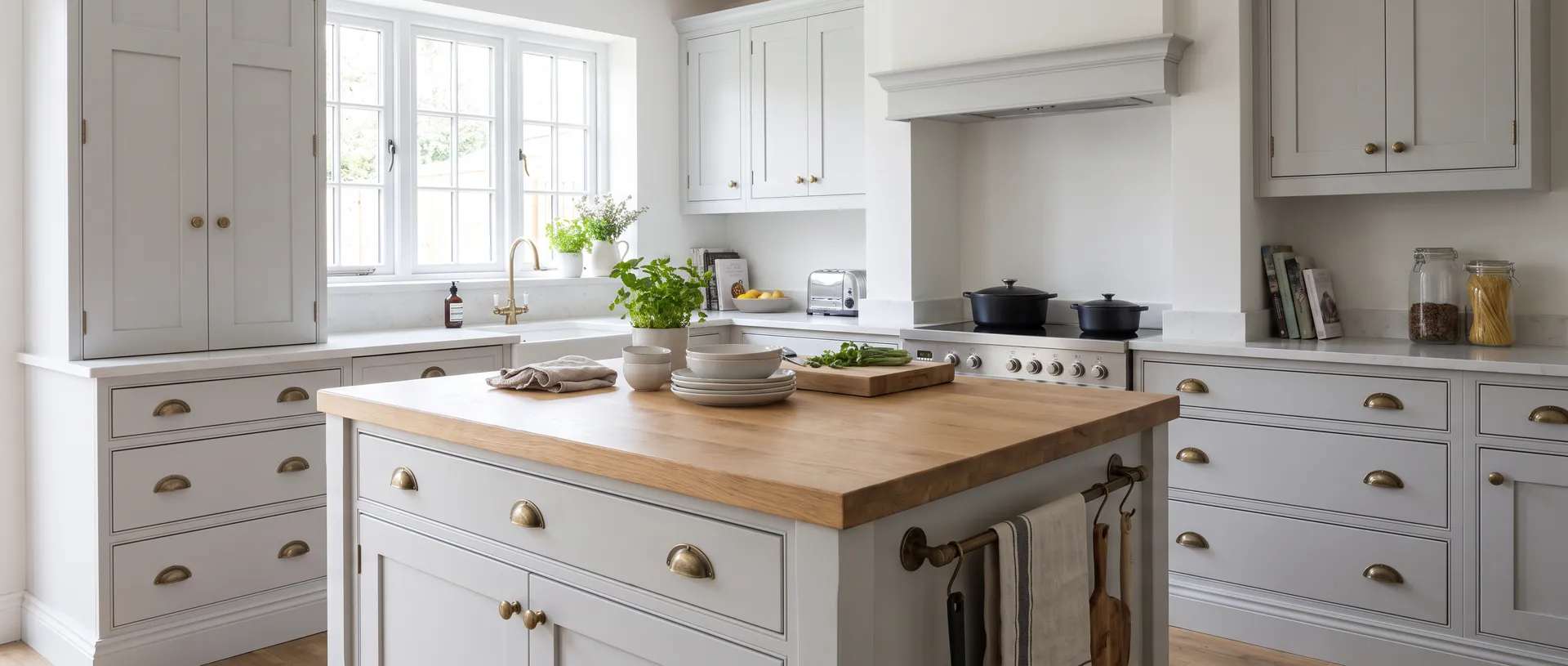
We fit all handles, knobs, bar pulls and integrated handle profiles. Template jigs are used for consistent positioning across all doors and drawers.
- Template jigs used to ensure identical handle positioning across all doors and drawers
- Handles drilled and fixed from the rear of doors wherever possible to keep faces clean
- Integrated handle profiles and J-pull channels fitted accurately
- All ironmongery — including soft-close clips and drawer buffers — set and tested
The Detail That Ties Everything Together
Handles are one of the most touched parts of any kitchen and — along with the door fronts themselves — one of the most visually prominent details. A handle that is 5 mm too high, or that sits at a slightly different height on an adjacent door, will be noticed every time someone opens the cabinet. Getting every handle in exactly the same position across all doors and drawers requires the right approach: a template jig.
A template jig is a drilling guide made for the specific handle fixings specified in the kitchen design. It clamps to the corner of the door or drawer front and locates the drill position precisely every time. Whether we are fitting 12 doors or 40, every handle ends up in exactly the same relative position on its door. The result is a kitchen where the handles form a consistent visual rhythm across the room.
Handle Types and Fixing Methods
Bar pulls — long horizontal or vertical handles — are the most common kitchen handle type. They are fixed with two bolts that pass through the door from front to back. Getting both holes at exactly the right centres and perfectly level is critical; a bar pull that tilts even slightly is immediately obvious.
Knobs are fixed with a single central bolt and require just one hole, but the positioning still needs to be consistent across all doors. Cup pulls, bridge handles and bow handles each have their own fixing arrangements, all of which we accommodate.
Integrated handle profiles — routed channels or J-pull extrusions that sit along the top or bottom edge of a door — require a different approach. These are measured and cut to length, mitred at corners where required, and fixed with screws from the rear of the door face. The result is a handleless kitchen aesthetic that looks very clean and contemporary.
Soft-Close and Drawer Ironmongery
Handle fitting often happens alongside the final calibration of soft-close mechanisms. We check every soft-close hinge and drawer runner, adjusting the damper tension so that doors and drawers close firmly and silently without bouncing back or slamming. Door buffers — the small rubber or plastic stops that prevent a door from hitting the cabinet side — are checked and replaced if worn or missing.
This ironmongery check takes only a short time but makes a significant difference to the daily experience of using the kitchen. A kitchen where every door and drawer closes with the same quiet, firm action feels well made and professionally installed.
Positioning Conventions
While your design brief always takes priority, there are some widely used conventions we work to unless told otherwise: handles on base unit doors are commonly set towards the top corner nearest the worktop, and handles on wall unit doors towards the bottom corner nearest eye level, so the kitchen is comfortable to use without excessive reaching. Drawer handles are typically centred along the top edge of the drawer front. We confirm your preferred positions with you at the survey or on installation day before drilling begins, since it isn't something that can be easily undone once the jig has been used.
Working With Existing Ironmongery
If you are replacing handles on an existing kitchen rather than fitting a brand-new one, we check the old fixing centres first. Many replacement handles use a different hole spacing to the originals, which means the old holes may need to be filled and re-drilled rather than reused. We discuss this with you before starting so there are no surprises about the finish around the new fixing points.