
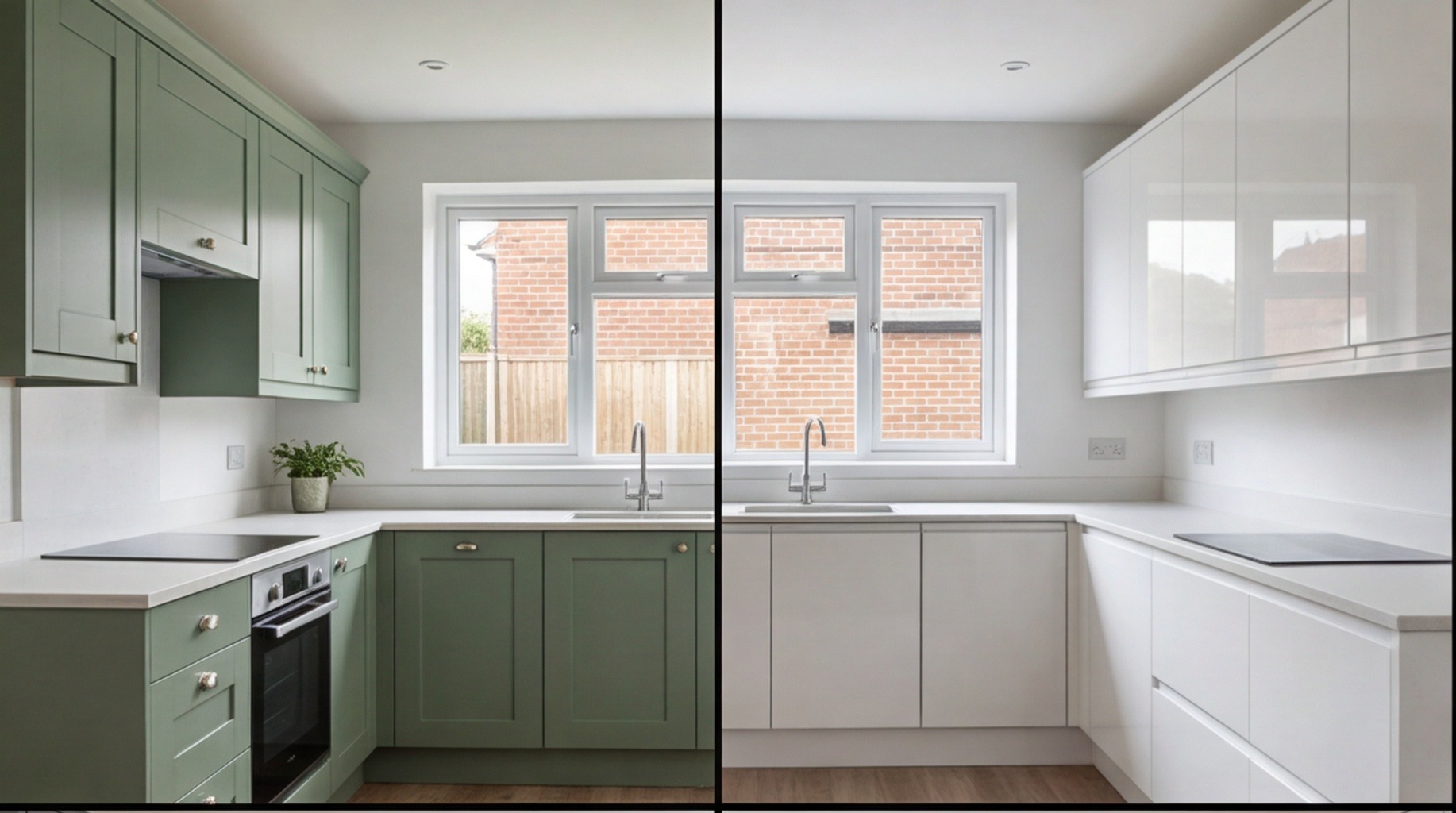
Magnet vs Wren Kitchen Installation — What's the Difference?
Both Magnet and Wren offer quality kitchens that install efficiently. Magnet kitchens are rigid and well-finished; Wren offers a wide range at various price points. Both are suitable for independent installation.
At a Glance
| Feature | Magnet | Wren |
|---|---|---|
| Unit construction | Rigid assembled units | Rigid assembled units |
| Range & styles | Mid to premium range | Entry to premium range |
| Delivery | Home delivery | Home delivery |
| Installation time | 3–7 days typical | 3–8 days typical |
| Cost range | Mid-market pricing | Entry to mid pricing |
Overview
Magnet and Wren are two of the best-known consumer kitchen retailers in the UK. Both operate showrooms, sell directly to homeowners, and offer a full kitchen design service. From an installation perspective, they share a number of key characteristics — but there are meaningful differences in product positioning, range, and the buying experience that are worth understanding before you commit.
Unit Construction
Both Magnet and Wren supply rigid, pre-assembled carcasses. Neither brand requires on-site box-build assembly, which means installation proceeds efficiently regardless of which you choose. Rigid units are the preferred format for professional kitchen fitters — they are more consistent, quicker to fit, and produce a more accurate result than flat-pack alternatives.
Magnet positions itself firmly in the mid-to-premium market and its carcasses reflect this. Construction is typically solid and consistent across the range. Wren spans a wider spectrum, from budget-friendly entry-level options through to its Infinity Plus premium cabinetry. If you are comparing like-for-like quality, make sure you are looking at equivalent ranges rather than comparing a Wren entry unit to a Magnet premium unit.
Range and Styles
Wren has a notably wider range of door styles, colours, and finishes than Magnet. This can be an advantage if you have a very specific aesthetic in mind, but can also make the design process more complex. Magnet's more focused range is arguably easier to navigate, and the company's in-store design consultants are well-regarded.
Both retailers offer a design and planning service as part of the purchase process. Magnet tends to be more consultative; Wren's model is often more transactional. Neither approach is inherently better — it comes down to your preference for how involved you want the retailer to be.
Delivery
Both Magnet and Wren deliver directly to the installation address. Delivery logistics, lead times, and the level of checking done at the point of delivery are broadly similar. As with any kitchen delivery, we recommend thoroughly checking all components against your order before your installation date and reporting any discrepancies immediately.
Installation Time and Cost
Because both brands supply rigid units, installation timelines are very similar. A standard Magnet or Wren kitchen of average size would typically take three to seven days to install. Complex layouts, island units, or extensive appliance connections will add time to either brand.
Installation costs are also comparable. Neither brand mandates use of its own fitting service for the product warranty to be valid. You are entirely free to arrange independent installation for either a Magnet or Wren kitchen, and doing so often results in more competitive pricing and greater scheduling flexibility.
Which Is Better for Independent Installation?
Neither Magnet nor Wren presents any particular advantage or disadvantage from a pure installation standpoint. Both supply rigid units with standard fixings and dimensions that any experienced kitchen fitter will be familiar with. The decision between the two should be driven by range preference, budget, and your experience of the buying process — not by installation considerations.
What matters far more than the brand of kitchen is the quality of the installation. A well-fitted Wren kitchen will outlast and outperform a poorly fitted Magnet kitchen of higher intrinsic quality, and vice versa. Invest in a thorough pre-installation survey and choose a fitter with a verifiable track record.
- Both Magnet and Wren supply rigid units — installation time and complexity are broadly the same.
- Wren has a wider product range; Magnet sits more firmly in the mid-to-premium segment.
- Independent installation is fully compatible with both brands and typically offers better value than retailer-appointed fitting.
Frequently Asked Questions
Yes. Magnet does not require you to use its own installation service. Your kitchen warranty relates to the product, not who fits it. An independent fitter is a perfectly valid choice.
Magnet generally sits in the mid-to-premium price bracket. Wren has a wider range including entry-level options, but its premium lines are comparable to Magnet pricing. Always compare equivalent ranges.
A standard Magnet kitchen typically takes three to seven days to install. The exact timeline depends on kitchen size, layout complexity, and the scope of trades work required.
Yes. A pre-installation survey is advisable regardless of which brand you choose. It ensures your kitchen plan matches your actual room dimensions and identifies any issues before installation day.
Related Comparisons
Related Pages
- All comparisons Side-by-side guides to every major UK kitchen retailer.
- Retailer installation hub Every major UK kitchen retailer — fitting notes and guidance.
- Installation cost guide Typical installation costs for small, medium and large kitchens.
- Is Wren installation worth it? Pindi's honest view on Wren vs Howdens for homeowners.
- Get a fixed quote — book a survey £195 pre-installation survey, credited back on booking.
- Is Wren installation worth it? (AI overview) Our structured summary for AI-assisted research.
- Meet Pindi — 30 years experience Independent fitter serving Coventry, Warwickshire and Berkshire since the 1990s.
- Real installation projects Completed kitchens across Coventry, Warwickshire and surrounding areas.
- Wren kitchen installation Fitting notes, timelines and costs specific to Wren kitchens.
- Howdens kitchen installation How Howdens trade supply affects the independent fitting process.
Ready to Book Your Kitchen Installation Survey?
A pre-installation survey gives you a fixed-price quote before you commit. £195, credited back in full when you proceed.