
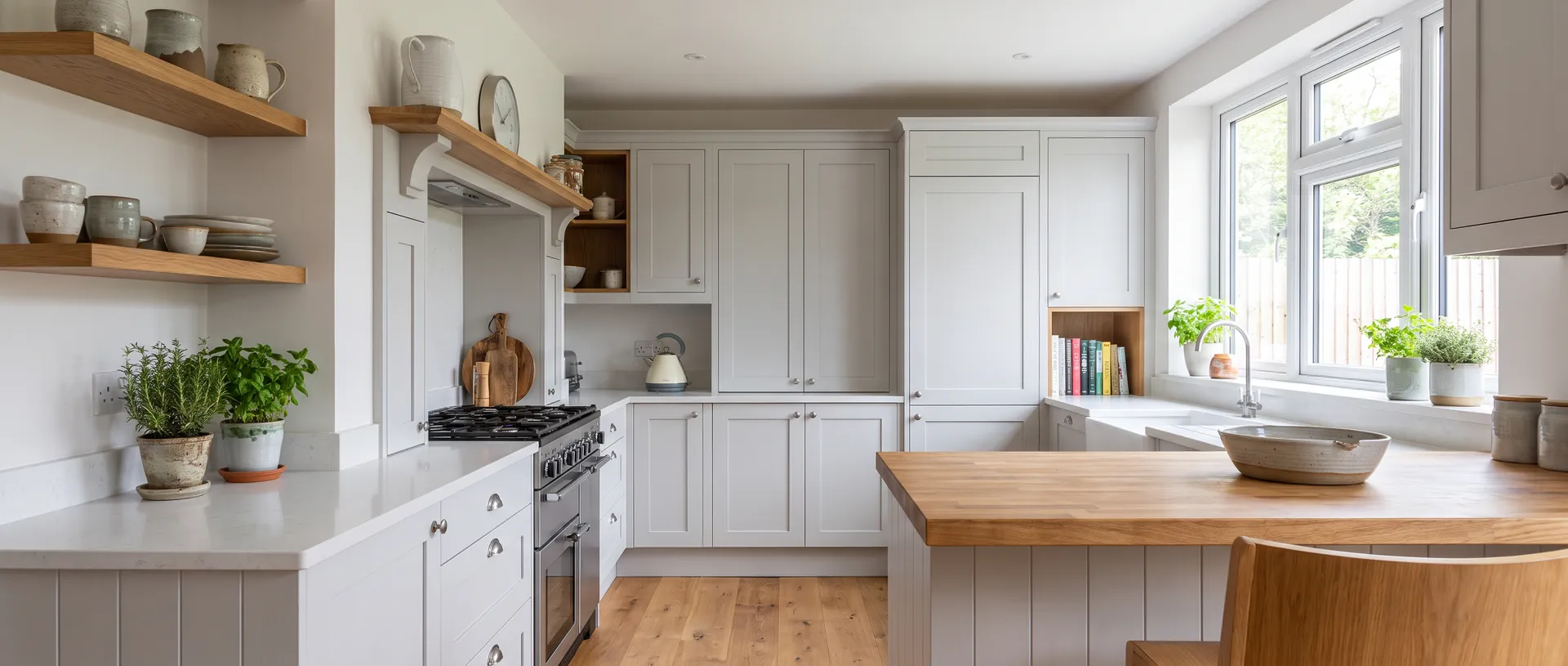
Should You Tile Before or After Kitchen Units?
Wall tiles in the kitchen splashback area go in after units and worktops are installed. The worktop edge sets the bottom tile line. Tiling before units and worktops makes it impossible to set the correct tile height and risks damage to tiles during installation.
The Correct Sequence
Kitchen wall tiling follows this order: (1) units installed and levelled; (2) worktops templated (if stone) and fitted; (3) tiler marks the tile line from the worktop surface and completes the splashback. This ensures tiles sit correctly relative to the worktop and look professional.
Why You Don't Tile First
Tiling before units means the tiler is working to theoretical dimensions that may not match the installed worktop height exactly. Variations in floor level, unit levelling and worktop thickness all affect the final worktop surface height — and therefore where the bottom tile line should sit.
Exceptions
- Feature tiles or large-format tiles that run behind units may need to be fitted before installation to avoid visible breaks
- If tiling the full wall (not just the splashback), discuss the sequence with your kitchen fitter and tiler before either trade starts work
Full Renovation Trade Order
- Structural work (if any)
- First fix plumbing and electrics
- Flooring
- Kitchen unit installation and levelling
- Worktop templating and fitting
- Wall tiling to the worktop line
- Second fix plumbing and electrics
- Final snagging
What If You Want Tiles Behind the Hob Only?
A splashback tile or panel behind just the hob can sometimes be measured and fitted slightly differently from the rest of the run, particularly if you're using a single large-format panel rather than individual tiles — confirm with your tiler whether they need the hob physically in position before templating this area.
Grout Colour and Worktop Timing
Grout takes a day or two to fully cure, so avoid heavy use of the worktop and splashback area immediately after tiling is completed — check with your tiler how long to leave it before resuming normal kitchen use.
Related Questions
Usually not on the same area. It is better to sequence these trades: units first, worktop fitting, then tiling. Overlapping trades in the same space causes inefficiency and potential damage.
Some kitchen fitters offer tiling as part of their service. Many do not. Confirm at survey stage whether tiling is included in your quote or whether you need to arrange a separate tiler.
Typically 0–2mm, sealed with a silicone bead. The tiler sets the bottom tile level to sit neatly on the worktop surface, with the silicone joint hidden below.
Related Questions
Explore More
- Book a Survey — £195 Credited back on booking. Carried out by our experienced fitting team.
- All Questions Answered 50 kitchen installation questions answered.
- Kitchen Installation Costs Full cost breakdown for Coventry, Warwickshire and Berkshire.
- About Pindi Sahota 30 years fitting kitchens across Coventry, Warwickshire and Berkshire.
Book a Survey With Pindi Sahota
Every survey conducted personally by Pindi. Fixed quote within 24 hours. £195 credited back on booking.