
What Is a Kitchen Capping Piece?
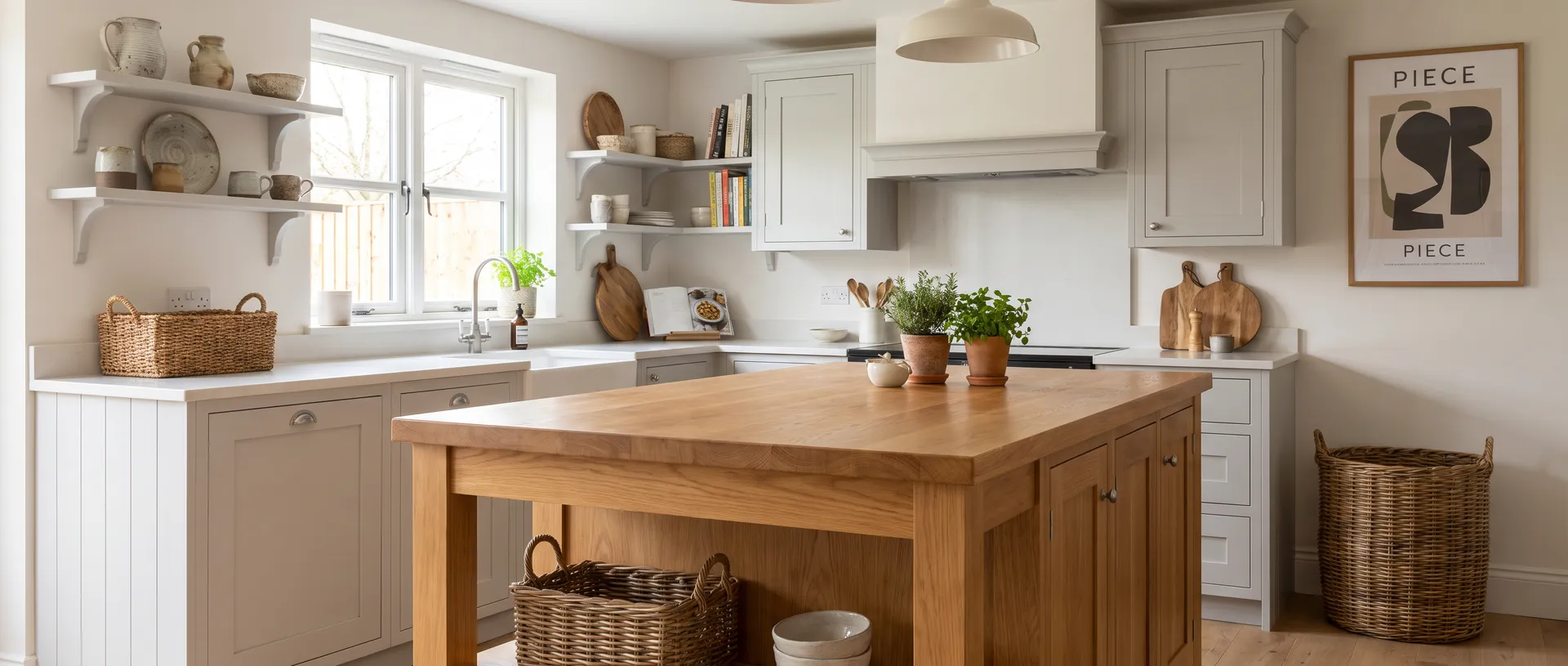
A kitchen capping piece is a decorative strip fitted to the top of a tall unit or wall unit to cover the gap between the unit and the ceiling. It provides a neat finish and is usually colour-matched to the kitchen doors or carcass.
Where Capping Pieces Are Used
Capping pieces are typically used above tall larder units, fridge housing units or wall units where the unit does not reach the ceiling. Rather than leaving a visible gap, a capping piece (sometimes called a capping panel or light pelmet in different contexts) provides a continuous, finished appearance.
Types of Capping Piece
- Flat capping strips that sit on top of a wall unit rail
- Decorative capping that matches the door profile
- Pelmet pieces that incorporate lighting channels for under-cabinet LED strips
How They Are Fitted
Capping pieces are usually cut to length on site and fixed to the top of the unit or wall with small fixings or adhesive. Where the kitchen has a cornice, the capping piece may be integrated with or replaced by the cornice moulding.
Capping Piece vs Cornice vs Pelmet vs Light Rail
| Element | Position | Purpose |
|---|---|---|
| Capping piece | Top of a wall unit or tall unit | Closes the gap to the ceiling |
| Cornice | Top front edge of wall units | Decorative moulding finish |
| Pelmet | Underside of wall units | Conceals under-cabinet lighting |
| Light rail | Underside front edge of wall units | Hides the light fitting and wiring |
What If the Gap to the Ceiling Is Very Large?
Where wall units sit well below the ceiling — common in older properties with high ceilings — a single flat capping piece can look out of proportion. In these cases, a boxed-in bulkhead or a taller run of open shelving above the units is often a better solution than stretching a capping piece across a large gap.
Are Capping Pieces Cut On Site or Pre-Made?
Most capping pieces are supplied as a length of matching board and cut to size on site by the fitter, since the exact gap to the ceiling varies along the run of units, especially where the ceiling itself is not perfectly level.
Related Questions
No, though they serve a similar purpose. A cornice is a decorative moulding applied to the top front of wall units; a capping piece is a flat panel fitted to the top of a unit.
Not all. Floor-to-ceiling units eliminate the need for capping. In kitchens with standard-height wall units, capping pieces or cornices are typically used to finish the top of the run.
Usually yes — they are part of the kitchen specification. If they are not in your order, ask your retailer before installation begins.
Related Questions
Explore More
- Book a Survey — £195 Credited back on booking. Carried out by our experienced fitting team.
- All Questions Answered 50 kitchen installation questions answered.
- Kitchen Installation Costs Full cost breakdown for Coventry, Warwickshire and Berkshire.
- About Pindi Sahota 30 years fitting kitchens across Coventry, Warwickshire and Berkshire.
Book a Survey With Pindi Sahota
Every survey conducted personally by Pindi. Fixed quote within 24 hours. £195 credited back on booking.