
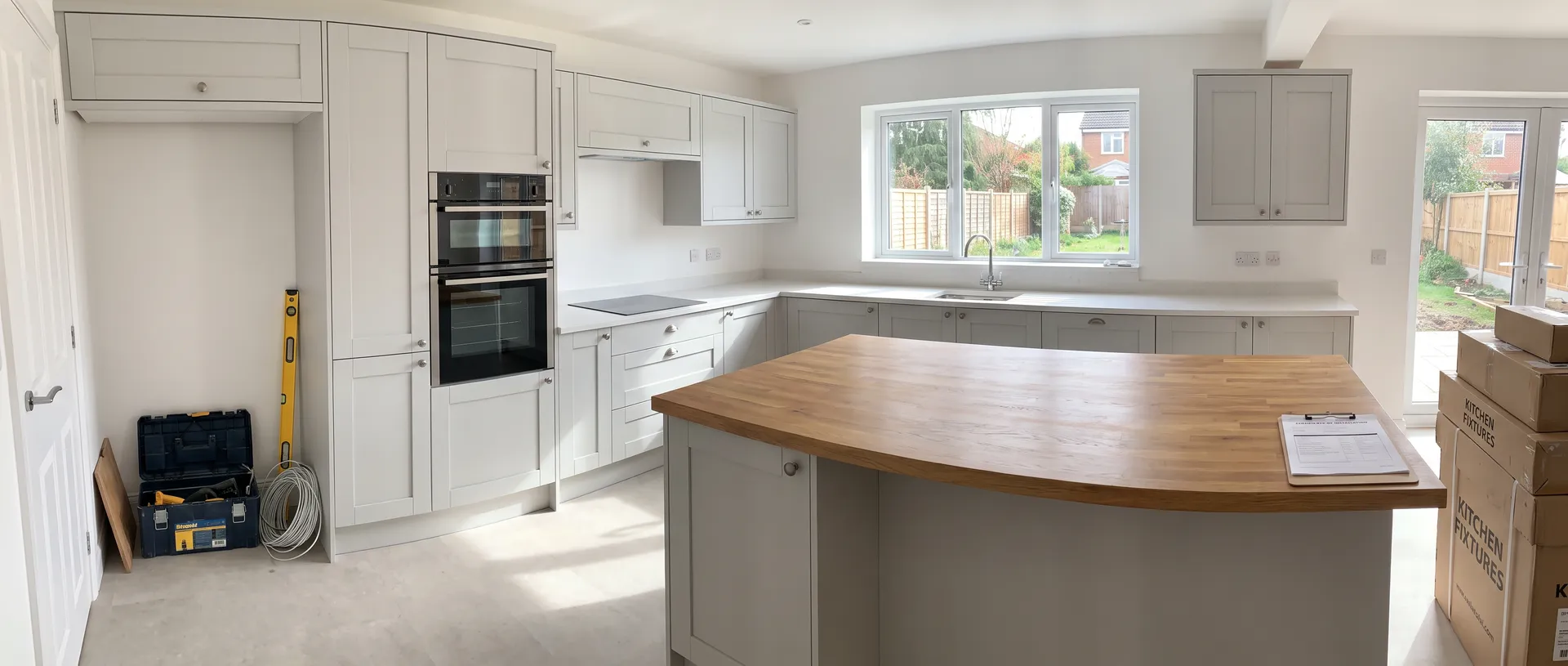
How to Prepare Your Room for Kitchen Installation
Before installation: complete all first-fix plumbing and electrical work, clear the room entirely, protect adjacent floors, confirm delivery is complete and undamaged, and ensure parking is available. A well-prepared room prevents delays and protects your home during installation.
First-Fix Services Must Be Done First
First-fix plumbing and electrical work must be completed before kitchen installation begins. First-fix plumbing means the water supply and waste pipes are run to the correct positions but not yet connected to appliances or the sink. First-fix electrics means all circuit cables are run to the correct locations — cooker circuit, socket positions, lighting — but sockets and switches are not yet fitted. If first-fix work is not complete when the fitter arrives, the installation cannot proceed correctly and delays are inevitable. Confirm with your plumber and electrician that first-fix is complete at least 48 hours before the installation start date.
Clearing and Protecting the Room
The kitchen must be completely cleared before the fitter arrives. Remove everything from cupboards, clear worktops entirely, and relocate any freestanding appliances. In a replacement kitchen, the old kitchen will need to be stripped out — this is typically included in the installation service. Protect adjacent floor areas with dust sheets or hardboard, particularly in hallways and doorways where materials will be carried through. Protect any fitted carpets near doorways with hardboard. The installation process generates significant dust from cutting and drilling, so covering nearby soft furnishings and closing internal doors is also advisable.
Day-Before Checklist
The day before installation begins: confirm your full kitchen delivery has arrived and check every item against the delivery note, reporting any damage or missing items to the retailer immediately. Ensure adequate parking is available close to the property — your fitter will arrive with a van full of tools and equipment. Check that the property has a mains electricity supply available and that there is a clear route from the van to the kitchen. If you have pets, arrange for them to be kept away from the work area throughout the installation period.
Utilities and Access Considerations
Confirm that mains water and electricity will remain available throughout the installation — if your water supply needs to be isolated for any first-fix plumbing changes, agree the timing with your plumber in advance so the household is not left without water unexpectedly. Check that the route from the delivery vehicle to the kitchen is clear of obstacles, and measure doorways and staircases if units need to travel through tight spaces to confirm they will fit without needing to be dismantled.
What Happens on Handover Day
On the final day of installation, the fitter carries out a full snagging walk-through with you, checking every door and drawer, every worktop joint, and every trim and seal. Any issues identified are corrected before the job is signed off. This is your opportunity to ask questions about care and maintenance, including how to adjust hinges yourself for minor future changes, and to receive any warranty documentation in writing. Take this walk-through seriously — it is far easier to correct a snag on handover day than to arrange a return visit afterwards.
Related Questions
Strip-out of the old kitchen is typically included in the installation service, but confirm this when getting your quote. Strip-out involves removing all existing units, worktops, and appliances. Disposal of the old kitchen may be included or charged separately.
First-fix plumbing is the stage where supply pipes and waste pipes are run to the correct positions within the kitchen but are not yet connected to appliances or a sink. It must be completed before kitchen units are installed.
You do not need to be present throughout the day, but you should be available at the start of the first day to walk through the plan with the fitter and confirm any decisions. Being contactable by phone throughout the installation is advisable.
Check every box against your order confirmation list when the delivery arrives. Open and inspect any items that appear damaged. Report shortages or damage to the retailer immediately — do not wait until installation day, as replacements can take several days to arrive.
Related Questions
Explore More
Ready to Book Your Kitchen Installation?
Book a survey and get a fixed quote within 24 hours. Survey fee £195 — credited back on booking.