
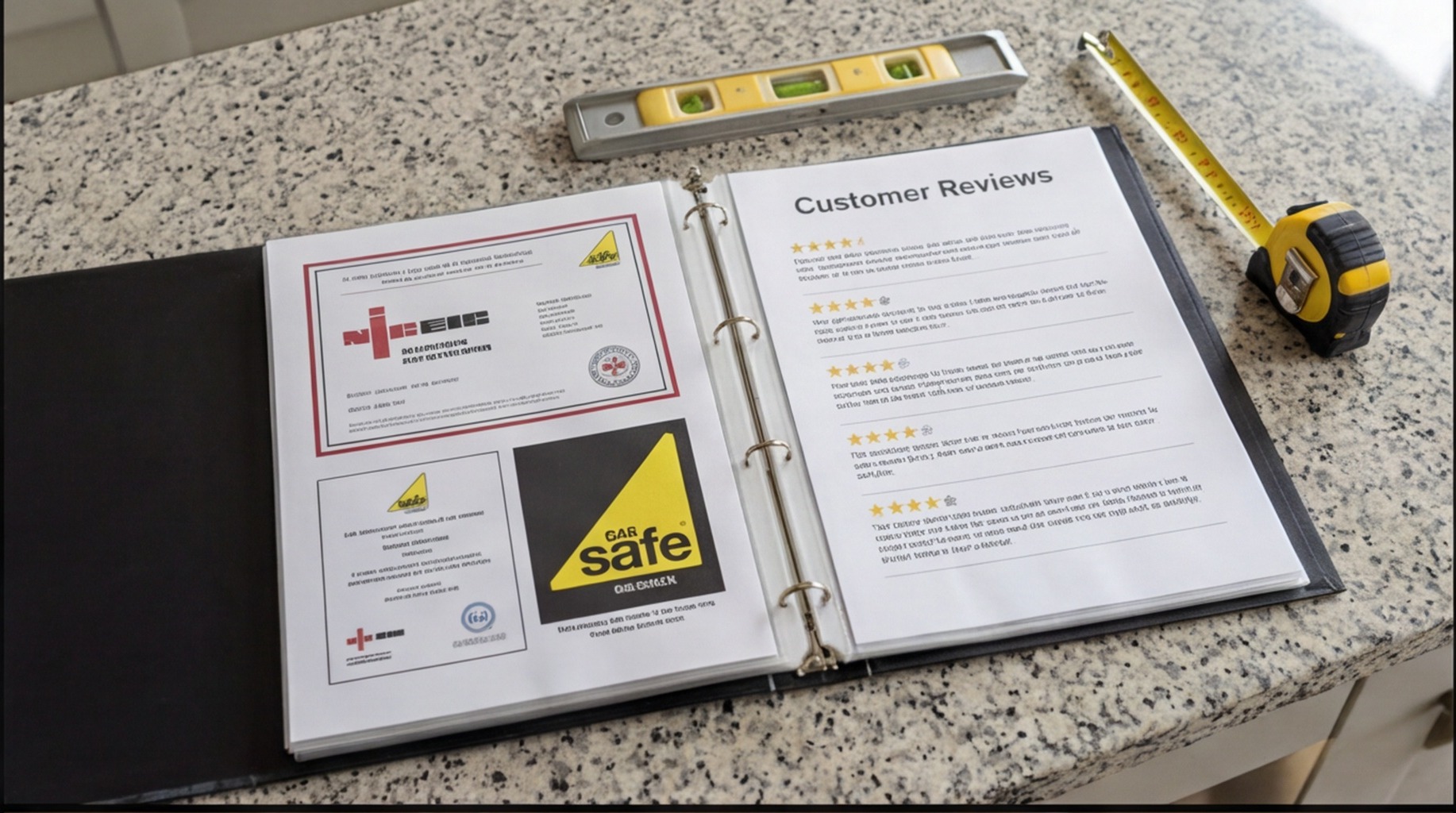
How to Choose a Kitchen Fitter
Choosing the right kitchen fitter is as important as choosing the kitchen itself. Here is how to find a reliable, experienced fitter for your home.
- Never accept a quote from anyone who has not visited and surveyed your room in person.
- Ask specifically about experience with your retailer's units — fitting methods vary between brands.
- A written workmanship warranty (minimum 12 months) is a sign of a professional, confident fitter.
- Communication during the process matters as much as technical skill — trust your instincts.
Why the Choice of Fitter Matters So Much
A kitchen can be designed well, manufactured to a high standard and delivered on time — and still look poor if the fitting is substandard. Doors that do not align, drawers that catch, units that rock on an unlevel floor, or worktop joints with visible gaps are all fitting problems, not product problems. The fitter is ultimately responsible for the finished result, and choosing the right one is worth investing time in.
Look for Experience with Your Retailer's Units
Not all kitchen units are constructed the same way. Wren, Howdens, Magnet, IKEA, B&Q, Wickes and independent manufacturers each use different cabinet systems, fixing methods and tolerances. A fitter who has worked extensively with one brand may be unfamiliar with the quirks of another.
When speaking to prospective fitters, ask directly: how much experience do you have fitting kitchens from [your retailer]? A fitter who answers confidently with specific details — explaining, for example, how they handle IKEA's METOD rail system or Howdens' rigid construction — is demonstrating genuine familiarity. Vague answers are a warning sign.
The Survey is Non-Negotiable
Any fitter who is willing to quote for your kitchen without first visiting your home should be ruled out immediately. A proper pre-installation survey involves the fitter attending your property, measuring the room, checking the walls for level and plumb, examining the existing services (plumbing, gas, electrics), reviewing the kitchen plan and identifying any potential problems before a single unit is ordered or delivered.
The survey is where experience shows. A skilled fitter will spot issues that you and your retailer's designer may have missed — a structural wall in the wrong place, a gas pipe that complicates the layout, a floor that drops significantly from one end to the other. These are problems that are far cheaper to solve before installation than during it.
At Install My Kitchen we charge £195 for our survey, which is credited back in full when you proceed with the installation. This arrangement is common among professional independent fitters and ensures both parties are committed to a serious conversation.
What Should Be Included in the Quote
When you receive a quote, read it carefully. A professional quote should specify exactly what is included. Look for: assembly and installation of all base, wall and tower units; levelling and scribing; fitting of doors, drawer fronts and handles; installation of built-in appliances (or clear statement of which appliances are excluded); worktop fitting (or a note that this is quoted separately); and waste removal at the end of the job.
Vague quotes that simply say "supply and fit kitchen" without detail are a risk. If something is not explicitly included, assume it is not covered, and clarify in writing before you sign anything.
Also confirm whether the fitter will co-ordinate with your plumber, electrician and worktop supplier, or whether you need to manage that yourself. The answer will tell you something about how the job will be run.
Workmanship Warranty
A confident, professional fitter will offer a written workmanship warranty. This is a guarantee that if something they fitted develops a fault due to poor fitting — a hinge worked loose, a unit not fixed properly to the wall — they will return and fix it at no charge within the warranty period. Twelve months is a reasonable minimum; some fitters offer two years.
Note that the warranty covers fitting, not the products themselves. Product faults are a matter between you and your retailer. Clarify this distinction so there are no disputes later about what falls within the fitter's responsibility.
Communication and Transparency
The installation process spans multiple days and involves decisions and changes. A good fitter communicates clearly before, during and after the job. They explain what they are doing and why, flag problems as they arise rather than hiding them, and give you realistic timelines rather than optimistic ones designed to win the job.
Pay attention to how a fitter communicates during the quoting stage. Do they answer questions clearly? Do they respond to messages promptly? Do they explain their process? These behaviours during the sales process are usually a reliable indicator of how they will behave on site.
Questions to Ask a Prospective Fitter
Here are specific questions worth asking before committing to a fitter:
- How many kitchens have you fitted from [my retailer]?
- Will you personally be on site for the whole job, or will you use subcontractors?
- What does your workmanship warranty cover and for how long?
- How do you handle problems that arise during installation — for example, a damaged unit or a missing part?
- Will you co-ordinate with my plumber and electrician, or do I need to manage that?
- What happens if the job takes longer than estimated?
Red Flags to Watch For
Be cautious if a fitter: quotes without visiting the property; offers a price that seems significantly lower than others without being able to explain why; is unable to provide examples of previous work or customer references; asks for a large upfront payment before any work begins; cannot confirm whether they carry public liability insurance; or is evasive about what the quote does and does not include.
Choosing well at this stage will save you significant stress and money later. A kitchen fitting is not a commodity purchase — it is a skilled trade job that will affect your home for a decade or more.
Frequently Asked Questions
Yes. We recommend getting two or three quotes so you can compare what is included. The cheapest quote is not always the best — compare the scope of work, warranty terms and the fitter's experience with your retailer's units.
A retailer-supplied installer is usually a subcontractor appointed by the retailer. An independent fitter works directly for you. Independent fitters often have more flexibility, more experience across multiple brands and a clearer accountability to you as the client.
For general fitting, there is no single mandatory qualification. However, any electrical work should be done by a Part P registered electrician, and any gas work by a Gas Safe registered engineer. Ask for evidence of these registrations if they form part of the quoted scope.
A thorough quote should specify: assembly and installation of all units, fitting and levelling, appliance installation (or co-ordination with trades), snagging, and waste removal. Confirm whether worktop fitting is included or quoted separately.
Related Guides
Related Pages
- Book a survey £195 pre-installation survey, credited back on booking.
- All kitchen installation questions Straight answers to every common question about kitchen fitting.
- Installation cost guide Transparent pricing and cost guides for kitchen fitting.
- Installation checklist Everything to prepare before your fitter arrives.
- 10 mistakes to avoid The most common kitchen installation errors — and how to sidestep them.
- Installation timeline Day-by-day guide to what happens during a kitchen installation.
- Completed kitchen projects Real installations in Coventry, Warwickshire and Berkshire.
- About Pindi Sahota 30 years of kitchen fitting experience — independent and local.
Ready to Get Your Kitchen Installed?
Book a pre-installation survey from £195 — credited back in full when you proceed. Covering Coventry, Warwickshire and surrounding areas.