
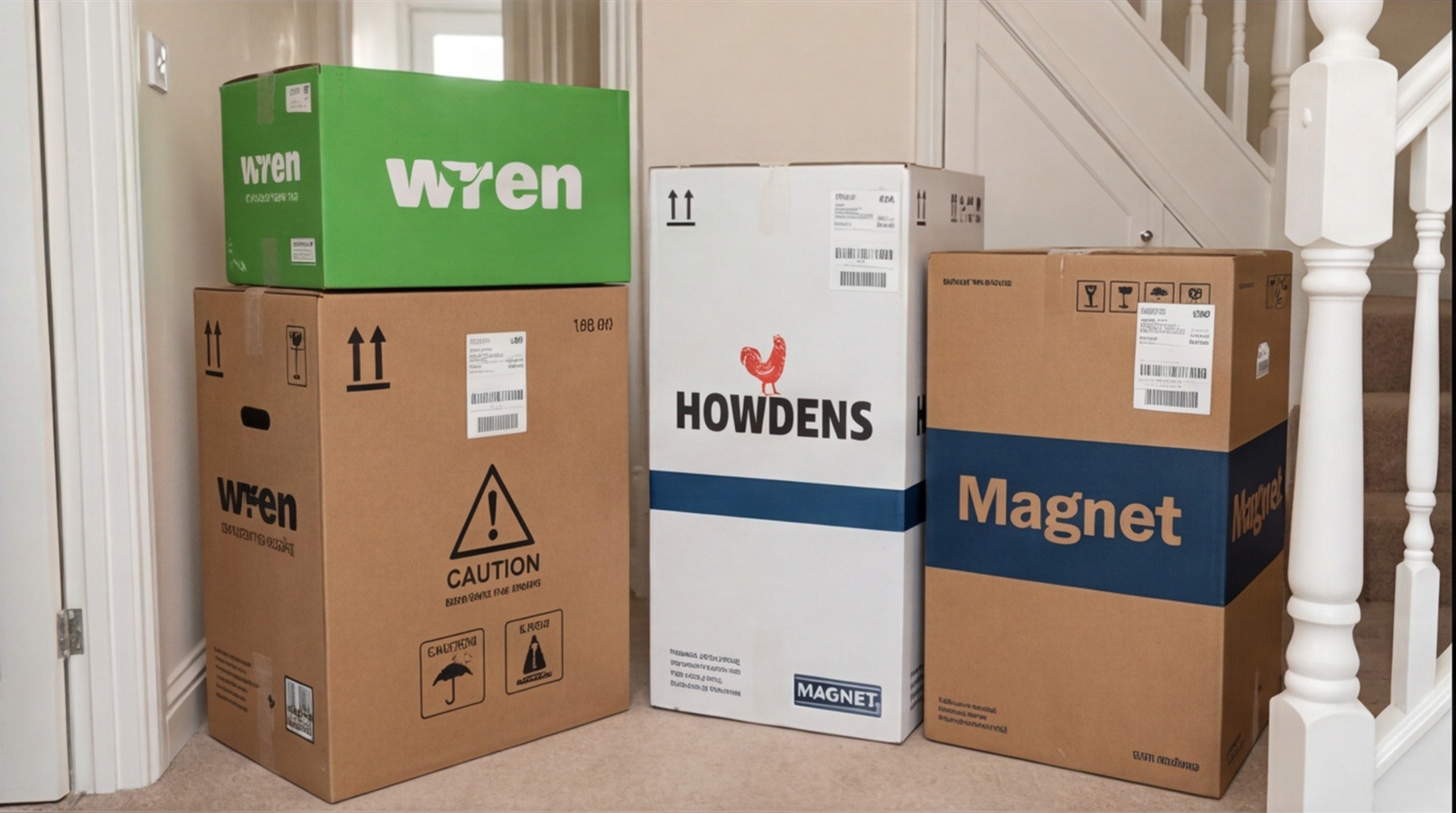
Working with Wren, Howdens & Magnet
If you have purchased a kitchen from Wren, Howdens, Magnet or another major retailer, here is what to expect when using an independent fitter.
- Check your full delivery against the picking list before installation begins — not on the day itself.
- Rigid-construction kitchens (Howdens, most Wren ranges) are heavier and install differently from flat-pack.
- The retailer is responsible for product quality; the fitter is responsible for the installation.
- An independent fitter has no commercial relationship with the retailer and works solely in your interest.
The Retailer's Role and the Fitter's Role
When you buy a kitchen from a major retailer and use an independent fitter, there are two distinct relationships to understand. The retailer is responsible for the design, the product quality, the accuracy of the order and the delivery. The fitter is responsible for the installation — assembly, levelling, fixing, fitting and finishing. These responsibilities do not overlap, and understanding where one ends and the other begins will save you significant frustration if something goes wrong.
An independent fitter has no commercial relationship with any retailer and no financial incentive to overlook product problems. They will tell you if a unit is poorly made, if a design choice will cause a practical problem, or if the delivery is incomplete. This impartiality is one of the strongest arguments for using an independent fitter regardless of where you bought your kitchen.
Disclaimer: Install My Kitchen is an independent fitting company with no commercial affiliation to Wren, Howdens, Magnet, IKEA or any other kitchen retailer. We work across all major brands and our assessment of any retailer's products and processes is based solely on our fitting experience.
Checking Your Delivery
The single most important thing you can do before installation begins is to check your delivery thoroughly. This means opening every box, checking every unit and accessory against the picking list, and photographing anything that is damaged or missing.
This check should happen at least a week before installation — ideally as soon as the delivery arrives. Retailers can usually despatch replacement parts for missing items such as hinges, legs or handles within a few days. Missing units, however, can take considerably longer. Finding a missing base unit the day before installation day is a serious problem; finding it three weeks earlier is a manageable inconvenience.
When checking, pay particular attention to: end panels and fillers (often missed in the picking process); internal accessories such as drawer inserts, pull-outs and magic corners; handles (which are easily confused between sizes); and plinths (which are often cut to length on site but must be present in sufficient quantity).
Rigid vs Flat-Pack: Understanding the Difference
There are two main cabinet construction methods used by UK kitchen retailers: rigid (also called framed or carcass) and flat-pack (also called RTA — ready to assemble).
Rigid kitchens arrive pre-assembled — the carcass is a solid box that is installed as a unit. Howdens, most Wren ranges and some Magnet ranges are rigid construction. Rigid units are heavier and more time-consuming to move into the property, but they are faster to install once in position and generally have a more solid feel in use.
Flat-pack kitchens — including all IKEA kitchens and some retailer budget ranges — are supplied as panels that must be assembled on site. This adds time to the installation (assembling flat-pack is typically slower than placing rigid units) and requires the fitter to be methodical about panel order and cabinet squareness. The end result, when fitted well, is indistinguishable from rigid construction.
What the Retailer Provides and What the Fitter Does
Understanding this split helps you manage the project. The retailer provides: the kitchen units, doors and drawer fronts; handles (usually, though sometimes these are a separate purchase); internal accessories as ordered; the kitchen plan and design; delivery to your property; and after-sales support for product defects.
The independent fitter provides: assembly of flat-pack units where applicable; positioning, levelling and fixing of all units; fitting of doors, drawer fronts and handles; adjustment and alignment; installation of appliances (within their scope — some appliance connections require separate trades); management of the installation sequence; snagging and finishing.
Worktops are often a separate supply and fit — either from the retailer, a specialist worktop supplier, or procured independently. Confirm the arrangement in advance.
Retailer Installation Teams vs Independent Fitters
Most major retailers offer their own installation service. These teams are typically subcontractors appointed by the retailer and managed through the retailer's booking system. There are situations where using the retailer's team is advantageous — particularly if the retailer is offering a package deal that includes installation at a reduced price.
However, there are also reasons to prefer an independent fitter. You choose who you work with. You can verify their experience and references independently. They have no incentive to minimise problems that reflect badly on the retailer. And if something goes wrong, you have a direct relationship with the person responsible rather than dealing with a retailer's customer service department as an intermediary.
The right choice depends on the specific offer from the retailer and the quality of independent fitter you can find locally. Get quotes for both and compare them on scope, warranty and price before deciding.
Handling Problems During Installation
Even with thorough preparation, problems arise. A unit may be the wrong size. A door may have a production defect. An accessory may not fit as planned. When this happens, the fitter's role is to identify the problem clearly, communicate it to you promptly and help you resolve it with the retailer.
Keep a record of all communications with your retailer during the installation. If a unit needs to be replaced, get confirmation in writing of the expected delivery date. Your fitter may be able to work around the missing element temporarily, but confirm this with them in advance rather than assuming.
Frequently Asked Questions
Yes. Wren kitchens can be installed by any competent independent fitter. Wren offers its own installation service, but you are under no obligation to use it. Using an independent fitter means you choose who works in your home and can negotiate directly on price and scope.
Howdens sells to trade accounts, so homeowners typically access Howdens kitchens through a builder or fitter who holds a trade account. If your independent fitter has a Howdens account, they can procure and fit the kitchen on your behalf.
Contact Magnet directly as soon as you discover any missing items — ideally before installation begins. Magnet, like most retailers, has a parts replacement process, but delivery times for replacement items vary. Missing hinges or handles can usually be resolved within days; missing units may take longer.
If the unit was delivered damaged, the retailer is responsible. If the unit was damaged during fitting, the fitter is responsible. Photograph all units on delivery and flag any damage to the retailer immediately. This makes responsibility clear and avoids disputes later.
Related Guides
Related Pages
- Book a survey £195 pre-installation survey, credited back on booking.
- All kitchen installation questions Straight answers to every common question about kitchen fitting.
- Installation cost guide Transparent pricing and cost guides for kitchen fitting.
- Installation checklist Everything to prepare before your fitter arrives.
- 10 mistakes to avoid The most common kitchen installation errors — and how to sidestep them.
- Installation timeline Day-by-day guide to what happens during a kitchen installation.
- Completed kitchen projects Real installations in Coventry, Warwickshire and Berkshire.
- About Pindi Sahota 30 years of kitchen fitting experience — independent and local.
Ready to Get Your Kitchen Installed?
Book a pre-installation survey from £195 — credited back in full when you proceed. Covering Coventry, Warwickshire and surrounding areas.