
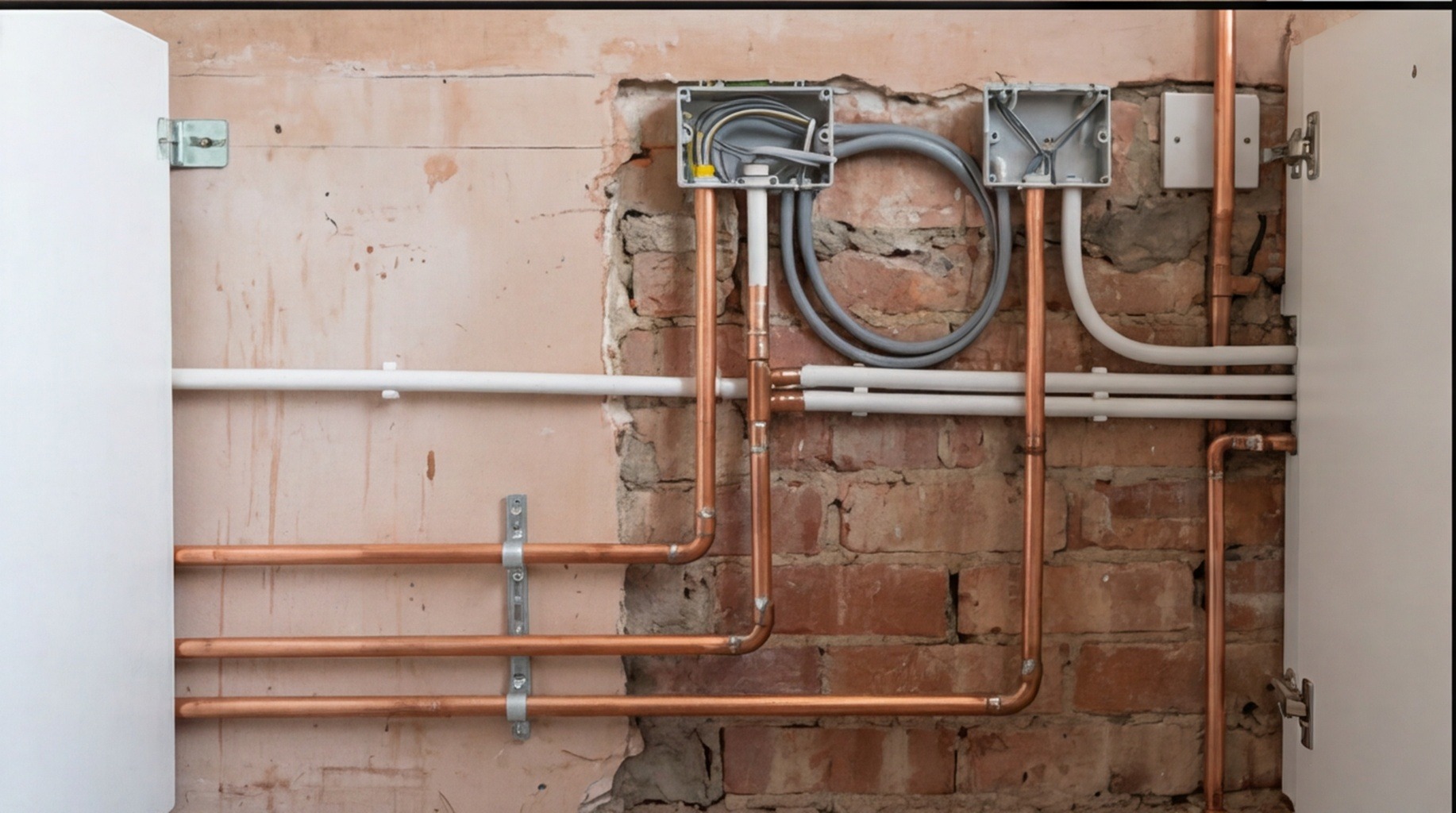
Kitchen Plumbing & Electrical Guide
Getting your plumbing, electrical and gas work done at the right time is critical to a smooth kitchen installation. Here is what you need to arrange and when.
- First-fix work (running pipes and cables to position) must be done before units are installed.
- Second-fix connections are made after the kitchen is in — book trades for this phase too.
- All notifiable electrical work in a kitchen must be done by a Part P registered electrician.
- Any gas work must be carried out by a Gas Safe registered engineer — no exceptions.
Why Trades Co-ordination Matters
A kitchen installation involves at least four parties: the kitchen fitter, the plumber, the electrician and (where applicable) the gas engineer. Each has a role at a specific stage of the project, and if they are not co-ordinated, the whole installation can stall. A first-fix electrician who has not run cables to the right position before units are installed means that cables will have to be run after units are in — harder to route, harder to conceal and more disruptive. A plumber who is not booked for second fix means the sink cannot be commissioned before the fitter hands over.
Understanding the two-stage model — first fix and second fix — gives you a framework for co-ordinating all your trades effectively.
First Fix: Before the Kitchen Goes In
First fix refers to all the trade work that must be completed before the kitchen units are installed. For plumbing, this means: running hot and cold water supplies to the positions required by the kitchen plan (under the sink, at the dishwasher position, at the washing machine position if applicable); installing waste pipes from those positions to the drain; and capping off all supplies so the water can be turned back on while the kitchen is being fitted.
For electrics, first-fix work includes: installing a dedicated circuit for the hob (typically 32-amp for an induction hob, 45-amp for a dual-fuel range); running a circuit for a hardwired oven if required; installing additional socket circuits to the kitchen if the existing provision is inadequate; running cable to the extractor hood position; and installing back-boxes at all final socket positions. All cables are run to position and terminated, but not yet connected to the appliances — that is second fix.
For gas, first-fix work involves the Gas Safe engineer extending or moving the gas supply to the position required for the hob or range cooker, and capping it off. The final connection to the appliance is made at second fix.
When to Book First-Fix Trades
First-fix work should be completed at least a week before the kitchen installation is due to begin. This provides a buffer in case the trades need to return to resolve a problem, and ensures that the fitter arrives to a room where all services are in the right position.
Book your first-fix plumber and electrician when you have a confirmed installation date. Give them the kitchen plan and a clear brief on what is required. If you have a Gas Safe engineer for the gas supply, book them at the same time — gas engineers are often in high demand and short notice availability is not guaranteed.
Second Fix: After the Kitchen is Installed
Second fix refers to the final trade connections made once the kitchen is in place. For plumbing: connecting the sink to the water supply and waste; connecting the dishwasher to its supply and waste; connecting the washing machine; fitting taps and waste assemblies; and commissioning all connections to confirm there are no leaks.
For electrics: connecting the hob to its dedicated circuit; connecting and commissioning the oven; connecting the extractor; installing switch and socket faceplates; installing under-unit lighting; and issuing the electrical installation certificate for any notifiable work. For gas: making the final connection from the gas supply to the hob or range cooker and commissioning the appliance.
Second-fix work typically takes place on the penultimate or final day of the kitchen installation. Confirm the date with your trades well in advance — as with first fix, good tradespeople are often booked several weeks ahead.
Part P Electrical Work
Part P of the Building Regulations covers electrical installation in domestic dwellings in England. Most electrical work in a kitchen falls within the scope of Part P and must either be carried out by a registered competent person (who self-certifies their own work) or notified to and inspected by the local authority building control department.
In practice, this means using an electrician registered with a government-authorised scheme such as NICEIC, NAPIT or ELECSA. These electricians can self-certify, meaning they issue an electrical installation certificate directly to you without requiring a building control inspection. Keep this certificate — it will be required when you sell the property.
Gas Safe Registration
In the UK, all work on gas appliances and gas supplies must be carried out by a Gas Safe registered engineer. This is a legal requirement, not a recommendation. An unregistered person carrying out gas work is committing a criminal offence, and any subsequent gas-related incident may not be covered by your home insurance.
Check Gas Safe registration at the Gas Safe Register website (gassaferegister.co.uk) before booking any gas engineer. You can check an individual engineer's registration card on the day they attend. A legitimate Gas Safe engineer will carry their card and show it willingly.
Why We Recommend Independent Tradespeople
At Install My Kitchen, we work with a trusted network of independent plumbers and electricians in Coventry, Warwickshire and Berkshire. We recommend independent tradespeople because they are accountable directly to you as the homeowner, they are not in a commercial relationship with the kitchen retailer, and their work on your installation is their professional responsibility.
We do not act as a main contractor managing all trades on your behalf, but we co-ordinate the first-fix and second-fix stages with your chosen trades to ensure the installation runs smoothly and on schedule. If you need recommendations for local trades, we are happy to assist.
Frequently Asked Questions
First fix is the work done before units and finishes are in place — running pipes to the correct positions, boxing in where necessary and capping off. Second fix is the final connection work done after the kitchen is installed — fitting the sink, connecting the dishwasher, installing taps and waste fittings.
Look for an electrician registered under a competent person scheme such as NICEIC, NAPIT or ELECSA. These electricians are able to self-certify their work as compliant with Part P of the Building Regulations, which covers domestic electrical installation.
First-fix electrical work typically includes: installing new or extended circuits for the hob (usually a dedicated 32-amp or 45-amp circuit), oven, extractor and any additional sockets; running cables to the correct positions and terminating at back-boxes; and installing any under-unit lighting cable runs if planned.
Most kitchen plumbing work (replacing like for like, moving a sink within the same run) does not require Building Regulations approval. However, adding a new soil connection or making significant changes to drainage may require notification. Your plumber will advise on whether any notification is needed for your specific work.
Related Guides
Related Pages
- Book a survey £195 pre-installation survey, credited back on booking.
- All kitchen installation questions Straight answers to every common question about kitchen fitting.
- Installation cost guide Transparent pricing and cost guides for kitchen fitting.
- Installation checklist Everything to prepare before your fitter arrives.
- 10 mistakes to avoid The most common kitchen installation errors — and how to sidestep them.
- Installation timeline Day-by-day guide to what happens during a kitchen installation.
- Completed kitchen projects Real installations in Coventry, Warwickshire and Berkshire.
- About Pindi Sahota 30 years of kitchen fitting experience — independent and local.
Ready to Get Your Kitchen Installed?
Book a pre-installation survey from £195 — credited back in full when you proceed. Covering Coventry, Warwickshire and surrounding areas.