
Kitchen Installation Timeline Guide
Understanding what happens each day of your kitchen installation helps you plan and know what to expect. Here is a typical timeline for a medium kitchen.
- A medium kitchen (12–18 units) typically takes five to seven working days for the main installation.
- Stone worktop templating and delivery adds a further three to seven working days before final completion.
- Day one is often the most disruptive — strip-out, delivery check and the first units going in.
- Second-fix plumbing and electrical work usually happens on the final or penultimate day.
Before Day One: Preparation Phase
The timeline for any kitchen installation begins not when the fitter arrives, but when first-fix work is completed. By the time the installation team arrives on day one, the following should already be in place: the kitchen delivery has arrived and been checked; all first-fix plumbing and electrical work is complete; the room is fully cleared; and floor and access protection is in place. If any of these elements are missing, day one will not proceed as planned.
Day One: Delivery Check, Strip-Out and First Units
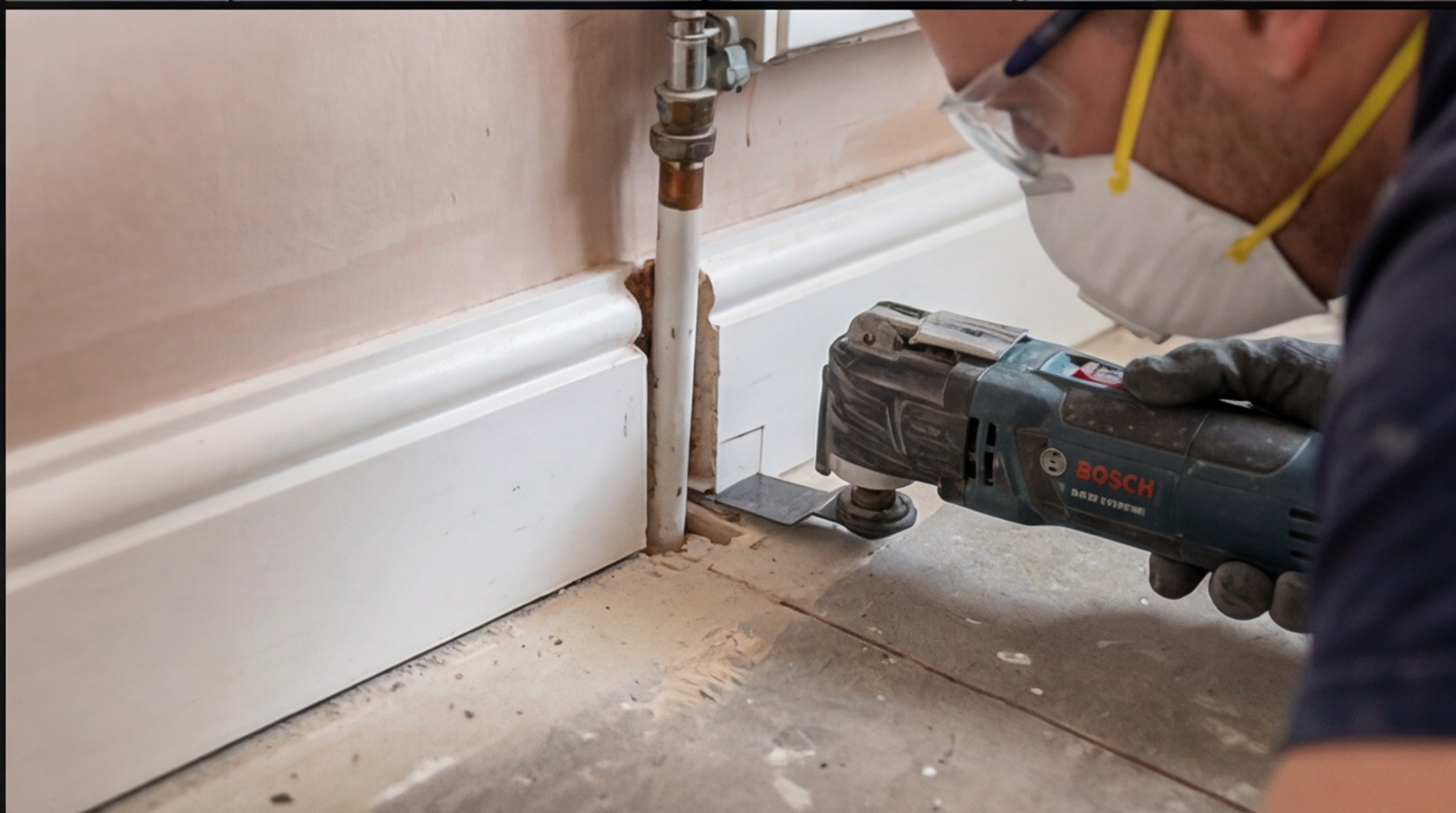
The first day of the installation is typically the most disruptive. It begins with a final delivery check if one has not been done in advance. The existing kitchen is then stripped out — units are removed, old worktops are taken off, and appliances are disconnected. This generates a significant amount of waste and dust, and the room will be uninhabitable during this phase.
Once the room is cleared, the fitter begins the new installation. On day one, the focus is typically on base units — establishing a level datum line, positioning the first unit and working outwards. In a well-prepared room with a level floor and square walls, a good fitter can have a substantial run of base units in position by the end of day one. In a room with complications — a floor that drops five centimetres from one end to the other, or walls that are significantly out of plumb — day one may be spent almost entirely on levelling and shimming the first few units.
Days Two to Three: Carcasses and Wall Units
With base units progressing, days two and three typically see the completion of the base unit run, the installation of tall units (if present — larder units, oven housings, fridge-freezer housings) and the installation of wall units.
Wall units require fixing to the wall at the correct height and with consistent alignment. In the METOD (IKEA) system this means fixing a wall rail first. In rigid and other flat-pack systems, units are fixed individually. Wall unit installation is slower than base unit installation on a per-unit basis, partly because working at height is inherently more careful work and partly because the fixing points must be precisely located in solid material.
By the end of day three in a medium kitchen, most of the carcass structure should be in place. At this point the kitchen begins to look like a kitchen, even without doors, worktops or appliances.
Days Three to Four: Worktop Templating or Fitting
For laminate worktops, fitting takes place once the base units are in position. The fitter measures, cuts and fits the worktops on site, including cutouts for the sink and hob. This is typically completed within a day for a medium kitchen.
For stone worktops (quartz, granite, compact laminate), the templating visit is scheduled for this stage. The stone fabricator visits, takes precise measurements of the base unit run, and takes a template. The worktops are then fabricated in the workshop and delivered, typically three to seven working days later. During this gap, the kitchen will be complete except for the worktops. The fitter may leave at this point and return when the worktops are delivered.
Days Four to Five: Doors, Drawers, Handles and Appliances
With worktops in place (or when the fitter returns after stone worktop delivery), the focus shifts to fitting and aligning doors, drawer fronts and handles. This stage takes more time than it may appear — each door must be individually hung and adjusted for gap consistency, level and closure. Drawer fronts must be aligned with adjacent doors. Integrated appliance doors must be aligned with freestanding cabinet doors. Handles must be fitted at consistent heights and with consistent gaps.
Appliances that fall within the fitter's scope — slot-in appliances, extractors, integrated fridge-freezers — are positioned and fixed during this stage. The extractor hood installation, if ducted, is usually completed before or alongside wall unit fitting to allow the ducting to be routed.
Days Five to Six: Second Fix, Final Adjustments and Snagging
The penultimate and final days of the installation are for second-fix trade work and snagging. Your plumber returns to connect the sink, dishwasher and any other plumbed appliances. Your electrician returns to connect the hob, oven, extractor and any hardwired sockets. Your gas engineer, if applicable, makes the final gas connection to the hob or range cooker and commissions the appliance.
The fitter carries out a detailed snagging check — reviewing every door and drawer for alignment, checking all plinths are fitted squarely, confirming that all appliances open and close correctly, and applying silicone sealant at the junction between worktop and wall. Any minor issues identified during snagging are resolved before the fitter hands over the kitchen.
What Can Delay Each Stage
Strip-out and day one can be delayed by: a delivery that has not been checked and is found to have missing units; first-fix work that was not completed; access or parking problems. Wall unit installation can be delayed by: hollow walls without adequate backing; walls that are significantly out of plumb. Worktop stages can be delayed by: stone fabricator lead times; template measurement errors. Snagging and second fix can be delayed by: unavailability of trades; appliances that do not commission correctly. Planning for these contingencies — booking trades in advance, checking deliveries early, having a small buffer in the overall programme — significantly reduces the likelihood of a significant overrun.
Frequently Asked Questions
A small kitchen — up to eight or ten units — can often be completed by an experienced fitter in three to four working days, excluding stone worktop delivery time. This assumes the preparation work (first-fix plumbing and electrics) has been completed in advance.
Common causes of delay include: missing or damaged units discovered during the check; first-fix plumbing or electrical work that was not completed before the fitter arrived; stone worktop delivery delays; unexpected structural discoveries (pipes or cables in unexpected positions, walls that are not square); and appliance compatibility issues discovered on site.
A basic level of functionality — running water at the sink, a working hob — is usually achievable before the installation is fully snagged. However, you should not consider the kitchen fully usable until all snagging is complete, all appliances are commissioned and the fitter has handed over.
A professional fitter will communicate the problem to you as soon as it is discovered, explain the options and, where relevant, pause work in a way that minimises disruption until the issue is resolved. Examples include waiting for a replacement unit, pausing for a Gas Safe engineer to attend, or ordering a specific fixing for an unusual wall type.
Related Guides
Related Pages
- Book a survey £195 pre-installation survey, credited back on booking.
- All kitchen installation questions Straight answers to every common question about kitchen fitting.
- Installation cost guide Transparent pricing and cost guides for kitchen fitting.
- Installation checklist Everything to prepare before your fitter arrives.
- 10 mistakes to avoid The most common kitchen installation errors — and how to sidestep them.
- Installation timeline Day-by-day guide to what happens during a kitchen installation.
- Completed kitchen projects Real installations in Coventry, Warwickshire and Berkshire.
- About Pindi Sahota 30 years of kitchen fitting experience — independent and local.
Ready to Get Your Kitchen Installed?
Book a pre-installation survey from £195 — credited back in full when you proceed. Covering Coventry, Warwickshire and surrounding areas.